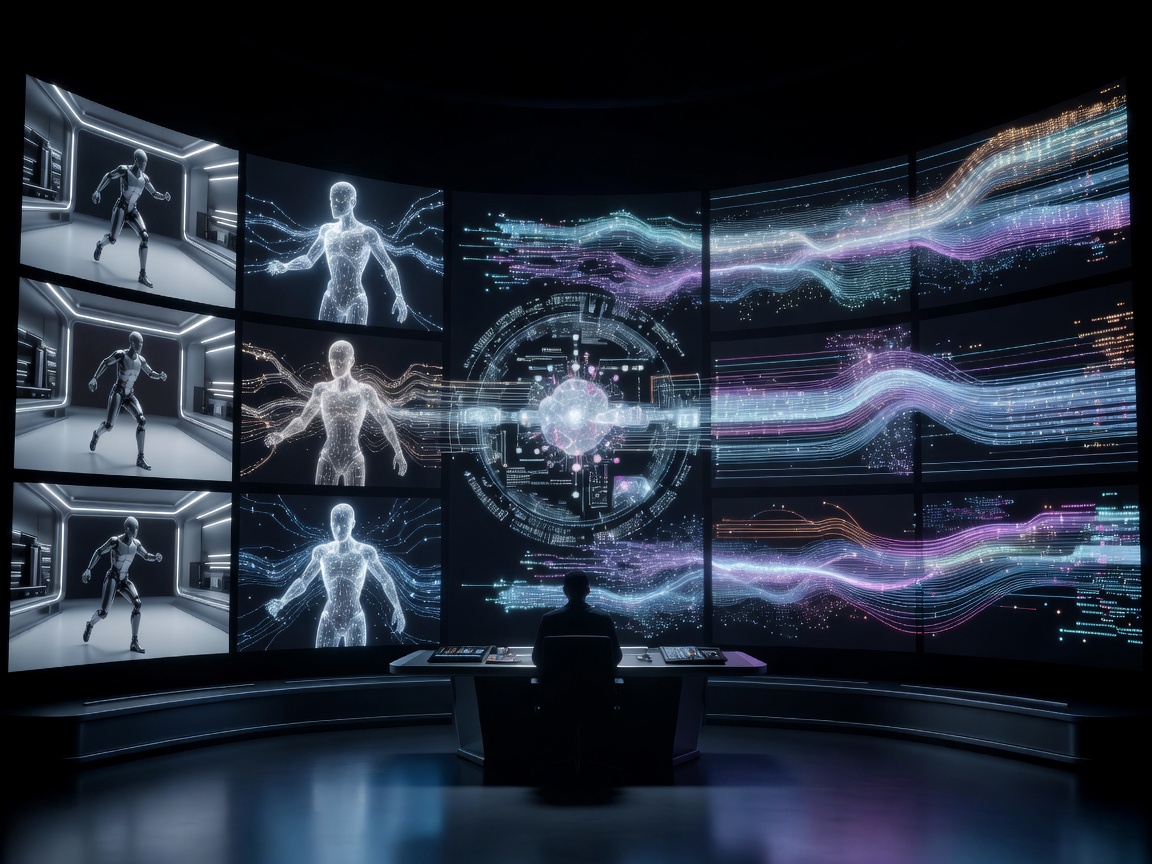
From narrative architecture and neural rendering to synthetic vocal matching and audience prediction, computational tools are restructuring every stage of the filmmaking pipeline.
01
Script Development & Narrative Structuring
Why are screenwriters and creative producers employing neural text models to stress-test act breaks, scene economy, character dialogue consistency, and coverage logistics before greenlighting a draft?
How do generative diffusion systems, deep learning de-ageing, neural radiance fields, and automated rotoscoping compress months of pixel-level manual compositing into hours of GPU computation?
How does acoustic voice cloning preserve an actor's organic timbre, emotional inflection, and micro-cadence across multiple foreign languages while synthetically re-timing mouth shapes?
What enables real-time LED volume environments, camera trajectory prediction, dynamic background relighting, and synthetic pre-visualisation to eliminate costly post-production corrections?
How do theatrical studios and streaming platforms deploy predictive models to optimise trailer pacing, generate personalised key art variants, and forecast box-office engagement across demographics?
Does artificial intelligence replace human screenwriters?
No, production studios rely on language models primarily as analytical readers and organizational co-processors rather than principal creative voices. The technology parses hundred-page screenplays to index thematic beats, locate plot inconsistencies, estimate scene running times, and prepare coverage reports, leaving core dramatic tension and human emotion to human authors.
Where does generative computing yield the largest financial savings?
The greatest immediate cost reductions occur in post-production labour, specifically visual rotoscoping, clean plating, digital rig removal, and foreign-language automated dialogue replacement. Automating repetitive manual frame painting permits visual effects boutiques to allocate specialised artistic hours toward complex high-concept imagery.
How are legal and intellectual property rights safeguarded?
Studios and independent financiers require strict provenance tracking for any training corpus used in concept art or visual assets. Commercial productions utilise closed models trained on proprietary studio archives or clean licensed databases to ensure copyright viability and union agreement compliance across key jurisdictions.
What changes will moviegoers notice first on screen?
Audiences experience synthetic integration most palpably through hyper-accurate multi-lingual lip synchronisation in foreign releases, seamless historical de-ageing of established actors, and richer digital set extensions in mid-budget motion pictures that previously lacked massive visual effects budgets.
We use essential cookies to ensure our site functions properly. With your consent, we also collect anonymous analytical information to understand how visitors engage with our filmmaking research.
Essential Operational Cookies (Always Active)Enabled